Skip to main content
Skip to footer


Dry & Wet Risers
Regular inspection, testing, and maintenance of Dry & Wet Riser Systems, including inlets, are paramount for businesses to uphold fire safety standards. Churches Fire & Security offers comprehensive services nationwide, encompassing installation, testing, and servicing to ensure compliance with fire regulations and customer expectations.
Dry & Wet Riser Systems Installed and Serviced
Need Some Help?
If you would like to find out more about our Dry & Wet Risers and how Churches Fire & Security can help you and your business, call our sales team on 0370 608 4350.

What is a Dry Riser?
A Dry Riser comprises permanently installed pipework, positioned to aid firefighters in tackling fires on upper building levels swiftly. This system facilitates the efficient movement of significant water volumes to different points within the building, crucially saving valuable time during emergencies.
Its design enables firefighters to connect their hoses to the water Dry Riser inlet valve at ground level and pump water up the dry pipe to strategically positioned landing valves throughout the building, ensuring effective fire suppression efforts.
Learn more about how Churches Fire & Security service and maintenance Dry & Wet Riser Systems in our downloadable pdf below.
How Often Should Dry Risers Be Serviced?
To comply with fire safety regulations set out in BS9990, Dry and Wet Risers should be visually inspected every six months, with a full test once a year to ensure that the system would perform correctly in an emergency. The yearly fire system inspection and testing includes pressure testing of the pipes with water for at least 15 minutes, during which the pipes are checked for faults or leaks.
Sometimes fire systems can be targets of vandalism, so regular service and inspections are vital in keeping your building safe. Our team of technicians are highly trained and equipped with all products and parts they may need to carry out quick repairs thus ensuring that your system remains in excellent working condition and fully compliant with all UK fire regulations.
Downloads
Dry & Wet Riser Info
Dry & Wet Riser Systems
Protect your multi-storey building with Dry or Wet Riser Systems from Churches Fire & Security. Both fire systems allow quick transportation of water to all floors of a building, ensuring the fire-brigade can respond quickly in the event of a fire.
We install fire protection systems for clients nationally all over the UK, we are a trusted provider of firefighting systems of the highest standards. Our Dry and Wet Riser installations are individually designed to meet fire safety regulations for the size, height and layout of your building.
Keeping up-to-date with fire safety rules and regulations as they are published, we ensure that your fire protection systems are fully compliant and maintained to the industry standards.
UK Requirements
For buildings over eighteen metres above ground level, Dry Risers are generally a fire safety requirement. Typically used in high rise buildings and flats, especially social housing, they take away the need for firefighters to run hoses up several floors.

Wet Riser Systems
What is a Wet Riser?
A Wet Riser performs the same function as a Dry Riser but it is permanently charged with water – served by a dedicated fire pump and water storage tank.
Difference between Dry Risers and Wet Risers
Dry Risers need water supplied to them via a fire engine while Wet Risers have their own dedicated water supplies and automatic pumping systems able to provide the high pressures required.
Why would you need a Wet Riser?
Wet Risers are typically installed in high rise buildings over fifty metres high. However, they can also be installed in buildings below this height where there is not enough space for a fire engine to get close to a building.

FAQs
Where Should A Dry Riser Be Located?
Click to find outThe Dry Riser inlet is usually located on an outside wall, close to where fire service vehicles can park. Landing valves are typically placed on each floor inside a stairwell so firefighters can connect their hoses quickly and safely. Inlets and valves must be accessible, kept in good working order and protected against vandalism.
What Is A Dry Riser Inlet?
Click to find outThe Dry Riser inlet is the connection point at ground level, usually housed in a secure cabinet on the outside of the building. Firefighters connect their pump to the inlet to push water up the Riser. Inlets must be checked during every inspection to ensure all elements are in good working order.
Who Is Responsible For Dry Riser Maintenance?
Click to find outThe Responsible Person for the building, usually the owner, landlord or managing agent, is responsible for ensuring Dry Risers are inspected, tested and kept in working order under the Regulatory Reform (Fire Safety) Order 2005. These inspections must be recorded clearly by the Responsible Person.
What Is The British Standard For Dry Risers?
Click to find outBS 9990 is the Standard for non-automatic firefighting systems in buildings, including Dry and Wet Risers. The Standard sets out best practice for their design, installation, inspection, testing and maintenance.
All Riser servicing carried out by Churches Fire & Security is in strict accordance with BS 9990.
When Is A Dry Riser Required?
Click to find outIn England, a Dry Riser is generally required in any building with a floor more than 18 metres to assist firefighters. Above 50 metres, a Wet Riser is required as a fire engine pump alone cannot push water to that height. Dry Risers may also be required in lower buildings where access for the fire service is limited.
How Do You Test A Dry Riser System?
Click to find outUnder BS 9990, Dry Risers should have a visual inspection every six months and a full wet pressure test annually.
For the pressure test, the system is filled with water and pressurised to check pipework, valves and inlets for leaks or faults. Our technicians also inspect the inlet cabinet, landing valves, caps and signage, with a report provided for your records.
How Does A Dry Riser Work?
Click to find outA Dry Riser is an empty pipe that runs vertically through a building. In the event of a fire, firefighters connect a pump from their engine to the Riser inlet at ground level and push water up the pipe. On each floor of the building, hoses are then connected to the landing valves which gives a solid water supply to extinguish a fire without running hoses up stairs.
What Is The Difference Between A Dry and Wet Riser?
Click to find outA Dry Riser is kept empty until firefighters push water through the system from their fire engine. A Wet Riser is permanently charged with water, supplied by its own tank and pumps, so it is ready to use immediately. Wet Risers are required in taller buildings usually above 50 metres. Both Dry and Wet Risers require regular inspection and testing.
Let's Discuss Your Fire Safety
Protect your business, staff, customers and assets with Churches Fire & Security safety solutions. Expertise from start to finish and we are fully compliant, ensuring you’re covered.

Articles you might be interested in
View all news articles
Closing the Competency Gap: Why Choosing the Right Fire Safety and Security Partner Matters
Nov 4, 2026 – by Beth Leonard

Churches Celebrates at the Women in Fire Safety Awards 2026
Oct 22, 2026 – by Beth Leonard

A Great Turnout for Our Churches Group Macmillan Coffee Morning 2026
Oct 14, 2026 – by Beth Leonard

Increasing Our Mental Health First Aiders
Sep 30, 2026 – by Beth Leonard
Related solutions

Fire Evacuation Drills
Evacuating the premises safely and effectively is paramount in the event of a fire and the procedure should be familiar to all employees and visitors.

Automatic Opening Vents (AOV)
Churches Fire & Security can help with the installation and servicing of Automatic Opening Vents (AOV), which are critical fire safety systems designed to provide effective smoke and heat ventilation in the event of a fire.

Evacuation Alert System
An Evacuation Alert System from Churches Fire & Security is designed for operation by the fire department and facilitates safe exit for residents and occupiers of high-rise residential properties in the event of a fire.

Emergency Lighting
Churches Fire & Security are experts in industry standard emergency lighting to guide your customers and staff to safety in an emergency.

Fire Training
With it being a legal requirement for employers to ensure that all employees are sufficiently fire-trained, we can offer expert fire training services.
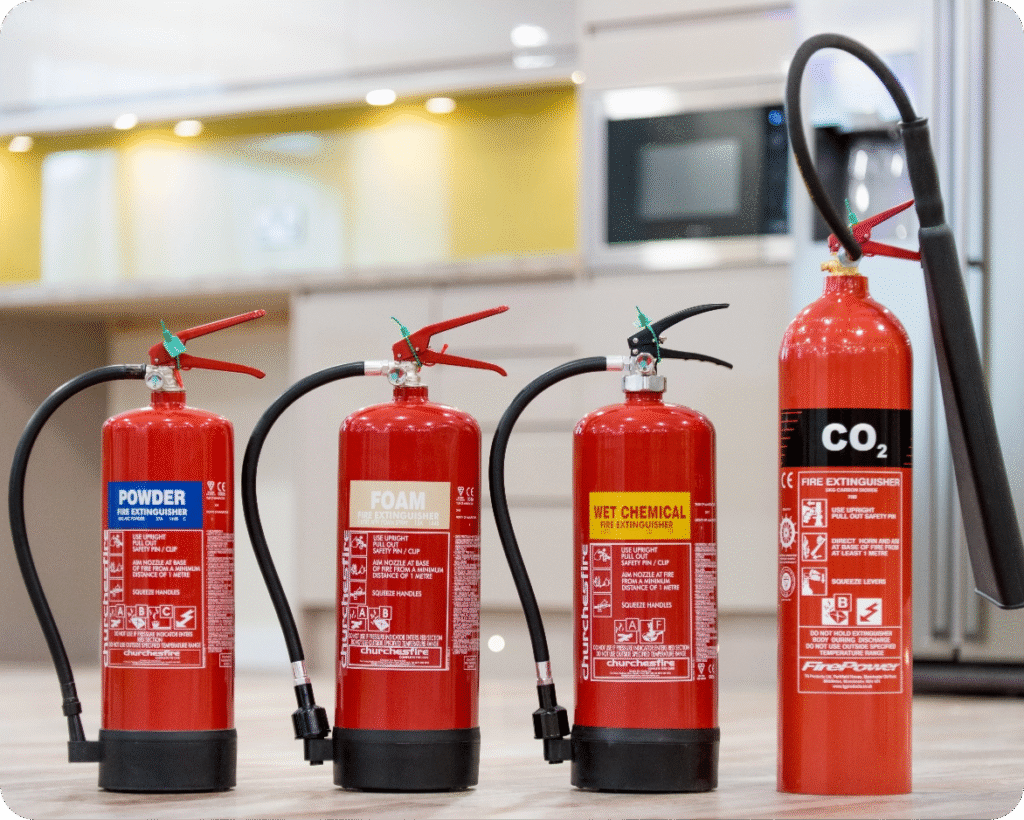
Fire Extinguishers
Churches Fire & Security have the benefit of a UK nationwide operation, so whether your business is large or small you will be covered. The fire extinguisher servicing plan meets all the statutory legal requirements. Starting at basic maintenance every 12 months.

Kitchen Fire Suppression Systems
A kitchen suppression system is used in a industrial or commercial kitchen, an area usually at high risk of fire or injury. Churches Fire supply and maintain both Ansul systems and Amerex products for customers, all of which require fully trained technicians to install and service.

Gent Fire Alarm Systems
We provide top-of-the-range Gent fire alarms that lead the industry to be one of the most advanced fire detection and alarm systems available on the market. A Gent fire alarm provides you with the peace of mind you’d expect from your system.

Fire Risk Assessment
At Churches Fire & Security we provide professional, practical Fire Risk Assessments (FRAs) that give you a clear understanding of fire risks in your premises and the actions needed to control them.

Hose Reels
Fire hose reels are excellent for tackling large fires. We will work with you to determine whether fire hose reels are right for your building and, if so, where they should be placed.